This is my second blog post on this topic in a series of three. For a little more context on the topic, my previous post explains the process I followed to allow me to write what follows.
Athlete 2 – a crazy lady who is always on the go
Prior to surgery relating to a recurrent and persistent lung disorder. This athlete described herself as, “as fit, determined, capable and able to tackle (pretty much) anything”. She hoped that others took a similar view, admitting that she harboured doubts about their perception of her and suspected that they saw, “a slightly overweight middle-aged woman who would give things a go.”
The illness progressed in such a way that participation in her preferred endurance sport of triathlon was no longer possible. This made her feel invisible; she had disappeared. Exercising at home became her safest option, affording her a basic level of fitness and the prospect of a good recovery from surgery, provided the surgery was a success. The risk of permanent disability was real if the surgery was not successful, and she explained, and she explained, “I just couldn’t reconcile that with my own image of myself. At times I got quite negative about my future.” In terms of how others perceived her at this point, she supposed that they thought she was busy or prioritising other things. Making a special point about her doctors, this athlete wondered whether they saw her as deluded, “a middle-aged woman who couldn’t breathe, but who still thought she might do triathlons again.” She explained that one doctor asked her why she was bothering, “would she prefer not to take it easy?”
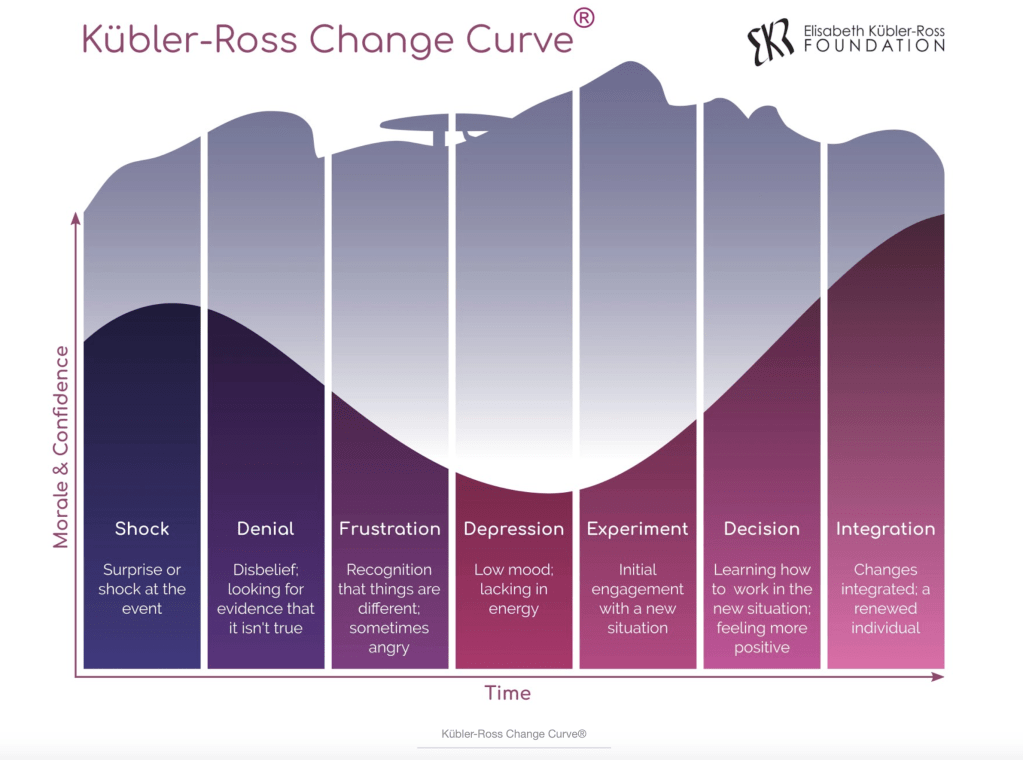
Picture Credit: Kubler-Ross, https://www.ekrfoundation.org/5-stages-of-grief/change-curve/
Following surgery, she feels much more hopeful. Taking into consideration her current limitations, she is working towards reducing them through hard work and rehabilitation. This consideration for the repairs she had to her lungs feels new to her, reflecting that prior to this surgery she was not good at pacing herself. In this post surgery phase, she feels that others might see no difference in her, especially those unaware of her situation.
As for the future, this resilient and determined woman perceives herself as, “very lucky. I have my future back and can look forward to enjoying the things I like to do.” She thinks that those around her will, “continue to see the crazy lady who is always on the go.”
My reflections: This athlete’s sense of self concept or identity wavered temporarily with respect to her prognosis, surgery and rehabilitation. She understood the risks and potential benefits of surgery and was willing to take this into account for a chance at a better future. She suffered from a diminished sense of visibility amongst her peers. When faced with the prospect of a permanent and life-changing disability she was defiant, determined, resilient and strong considering the doubts and (mis) perceptions of (some of) her doctors.
 HOME
HOME 
Leave a comment